
Stop Chasing Sciatica Symptoms: How to Relieve the Real Pressure on Your Nerve
Sciatica Guide
Written by Dr. Mina, Culver Spine · 6 min read
Sudden, fiery pain from your lower back, through the glute and down your leg. You can’t sit through a workday, driving is miserable, and sleep is a negotiation. Many patients tell us: “I’ve stretched and taken pain relievers, but the burning comes back every time I stand up.”
This guide explains why chasing the leg pain rarely works, what is usually pressing on the nerve, and how our Culver City team relieves that pressure.
Quick answer: sciatica is a symptom, not a diagnosis. It means something is compressing or irritating the sciatic nerve, most often a bulging or herniated disc, misaligned lumbar joints, or a tight piriformis muscle. Relief lasts when the pressure on the nerve root is addressed, not just the pain signal.
Why chasing symptoms fails
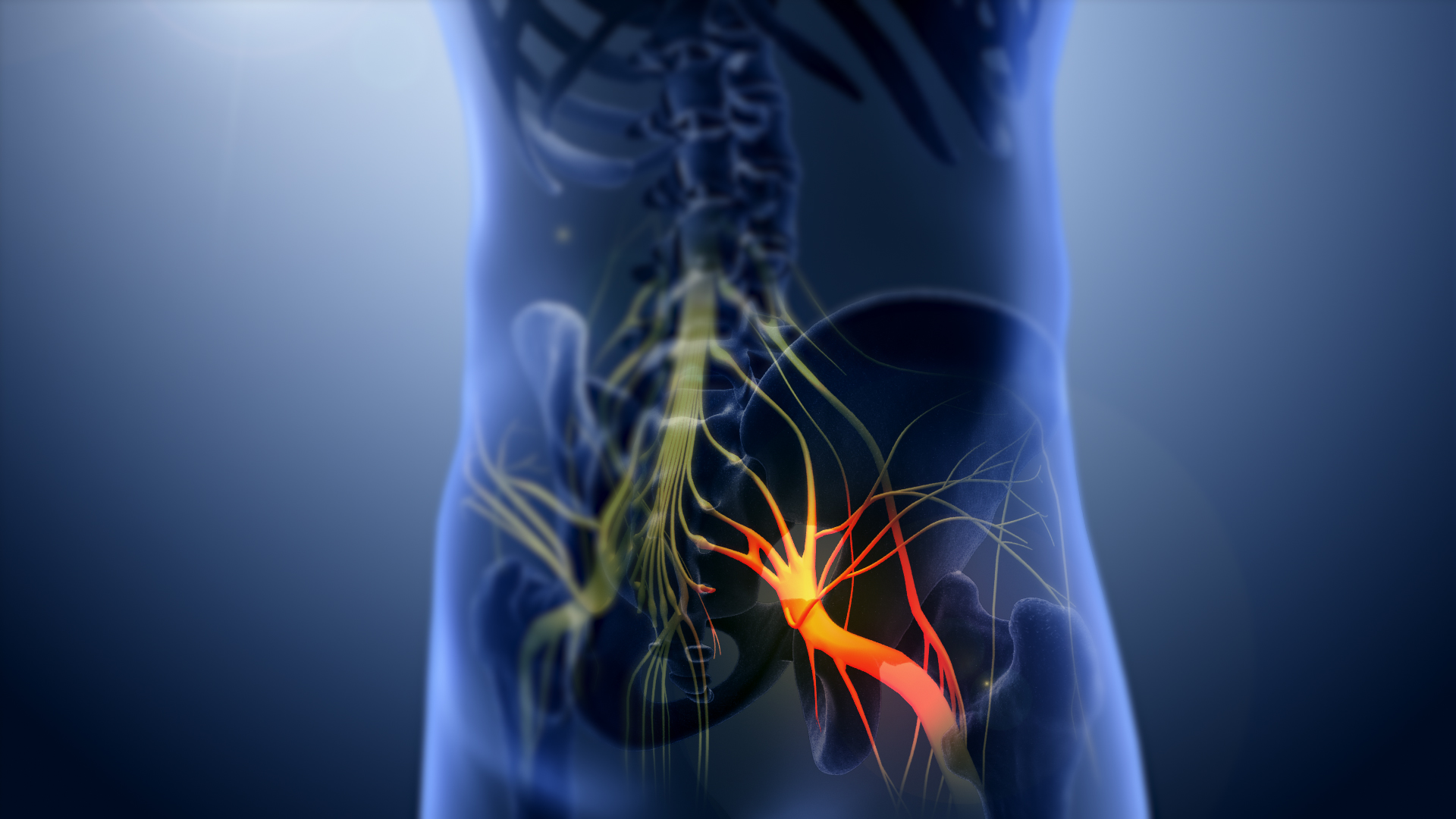
Sciatica is a warning, not a standalone condition. The sciatic nerve is the longest nerve in your body, and when something presses on it, the pain follows its path. Rubbing the leg or numbing the signal with anti-inflammatories is like switching off a smoke detector while the fire is still burning in the wall. If the physical force on the nerve root stays, the burning returns as soon as the medication wears off.
The three usual causes of sciatica
The nerve travels from your lower lumbar spine through the pelvis, hips and legs. In most cases we treat, one of three mechanical problems is behind it:
Bulging or herniated disc
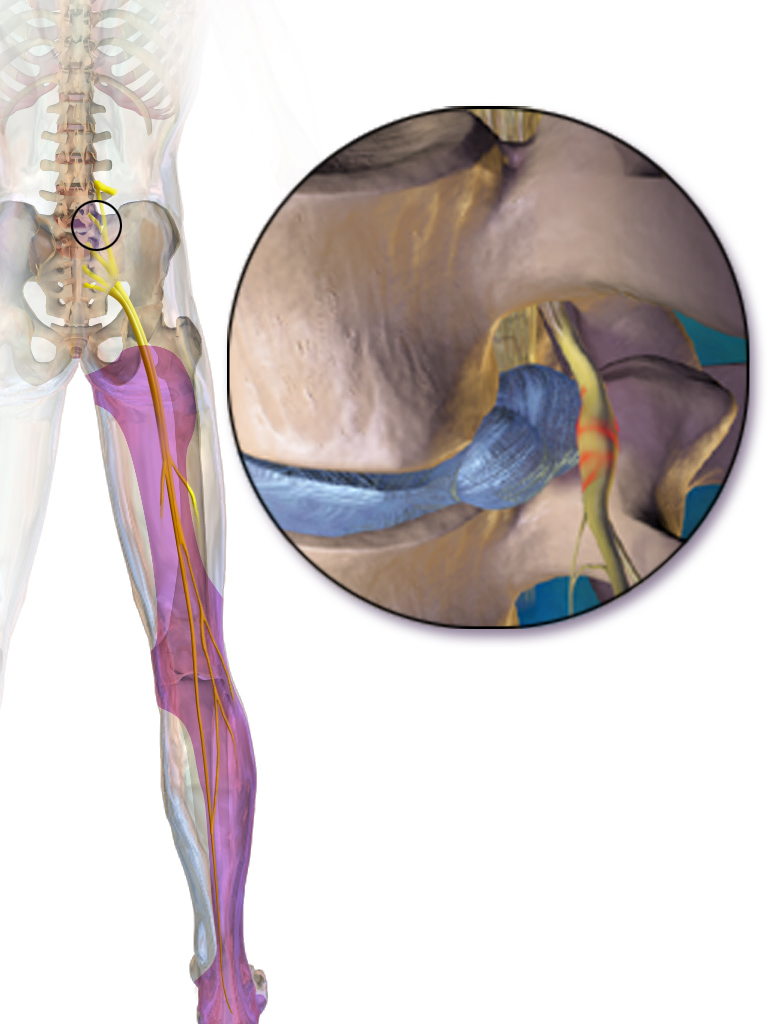
Internal disc pressure pushes disc tissue outward against the nerve root leaving the spine.
Joint misalignment
Shifted lumbar vertebrae narrow the small openings the nerves travel through.
Piriformis tightness
A chronically tight muscle deep in the glute clamps down over the nerve.
Disc-related leg pain is the one we see most. If that sounds like you, read herniated vs. protruding disc: what your MRI report means or our disc herniation treatment in Culver City page.
Why a generic stretching routine can backfire
Because the cause differs from person to person, a blanket routine from the internet can make things worse. If your irritation comes from a lower lumbar disc herniation, forward-bending hamstring stretches can push that disc further into the nerve root. That is why we run specific neurological tests and review diagnostic imaging before starting care, so every adjustment or decompression session fits your spine.
How we relieve pressure on the nerve
To resolve sciatica, the pressure has to come off at the exact point of entrapment. At Culver Spine we combine gentle chiropractic adjustments with non-surgical spinal decompression. Decompression opens joint space and uses negative pressure to encourage bulging disc tissue back toward place. As nerve inflammation calms, the radiating leg pain fades over the course of your care plan. Read Dr. Mina’s guide to what decompression feels like and who it helps, or see our sciatica treatment in Culver City page.
Results vary, and we tell you honestly after the exam whether your case suits this approach or needs a referral.
Get same-day medical care if leg pain comes with numbness in the saddle area, loss of bladder or bowel control, or sudden weakness in both legs.
Sciatica in Culver City: common questions
What causes sciatica?
Compression or irritation of the sciatic nerve, most often from a bulging or herniated disc, misaligned lumbar joints, or a tight piriformis muscle.
Will stretching fix my sciatica?
Not reliably. The right stretch depends on the cause, and some forward-bending stretches can aggravate a disc problem. An exam comes first.
How does spinal decompression help sciatica?
It gently opens space between vertebrae and creates negative pressure that can ease disc pressure on the nerve root, so inflammation settles and leg pain fades.
Do I need surgery for sciatica?
Many cases improve with non-surgical care. Surgery is a consideration for severe or progressive cases, and we refer when your exam points that way.
When is sciatica an emergency?
If it comes with saddle-area numbness, loss of bladder or bowel control, or sudden weakness in both legs, get same-day medical care.
Where is Culver Spine located?
5601 W Slauson Ave, Suite 266, Culver City, CA 90230. Call (424) 228-4638.
Find what is pressing on your nerve
You don’t have to accept shooting leg pain, numbness or tingling as normal, or jump straight to surgery. Start with an exam that finds the source.
Or call (424) 228-4638 or send us a message.
Also in Orange: the La Veta Wellness guide to herniated disc pain and Dr. Mina’s sciatica care in Orange.