
What Your Back Needs is Breathing Room: Dr. Mina’s Guide to Non-Surgical Spinal Decompression
Spinal Decompression Guide
Written by Dr. Mina, Culver Spine · 9 min read
If you’re reading this while shifting uncomfortably in your chair, constantly adjusting your posture, or holding your lower back, we know exactly what you’re going through.
It’s a scene we see almost every week at Culver Spine: someone walks through our doors carrying a heavy folder filled with MRI scans, X-rays, and medical reports, looking completely exhausted.
Usually, they’ve been dealing with a bulging or herniated disc for months, sometimes even years. Simple daily joys have faded away. They can’t play with their kids or grandkids without wincing, sitting at a desk for a 30-minute meeting feels like torture, and every morning starts with that dreaded, sharp, shooting pain radiating down their leg.
Worst of all, after months of trying everything, their specialist just dropped the word every back pain sufferer fears:
“It might be time to talk about surgery.”
They look at me with a mix of fear and hope and ask the exact same question: “Dr. Mina, is surgery really my only option left?”
For a long time, traditional medicine didn’t have a great middle ground between basic physical therapy and invasive spinal surgery. But once we understood how to create a natural “breathing room” inside the spine, that completely changed.
The short answer
Non-surgical spinal decompression is a gentle, FDA-cleared, computer-assisted treatment for disc-related back and neck pain. A table slowly stretches and relaxes the spine to take pressure off discs and pinched nerves, with no incisions, needles, or anesthesia. At Culver Spine in Culver City, most plans run a series of sessions over 4 to 6 weeks after a full physical evaluation.
Why Standard Back Pain Fixes Keep Hitting a Wall
When people get caught in the chronic back pain cycle, they usually get pushed through the standard conveyor belt of treatments:
Medication
Pain Medications and Injections
Epidurals and anti-inflammatories can dull the pain signals so you can get through your workday, but they act as a temporary mask. They don’t fix the underlying mechanical pressure.
Self-care
Aggressive Stretches and Foam Rolling
Stretching works wonders for tight muscles, but if you have a bulging disc pinching an inflamed nerve root, pulling on that area often irritates the nerve further.
Rehab
Standard Physical Therapy
Strengthening your core and back muscles is crucial for long-term health, but it’s nearly impossible to do these exercises effectively when the spinal joint itself is still under constant crush pressure.
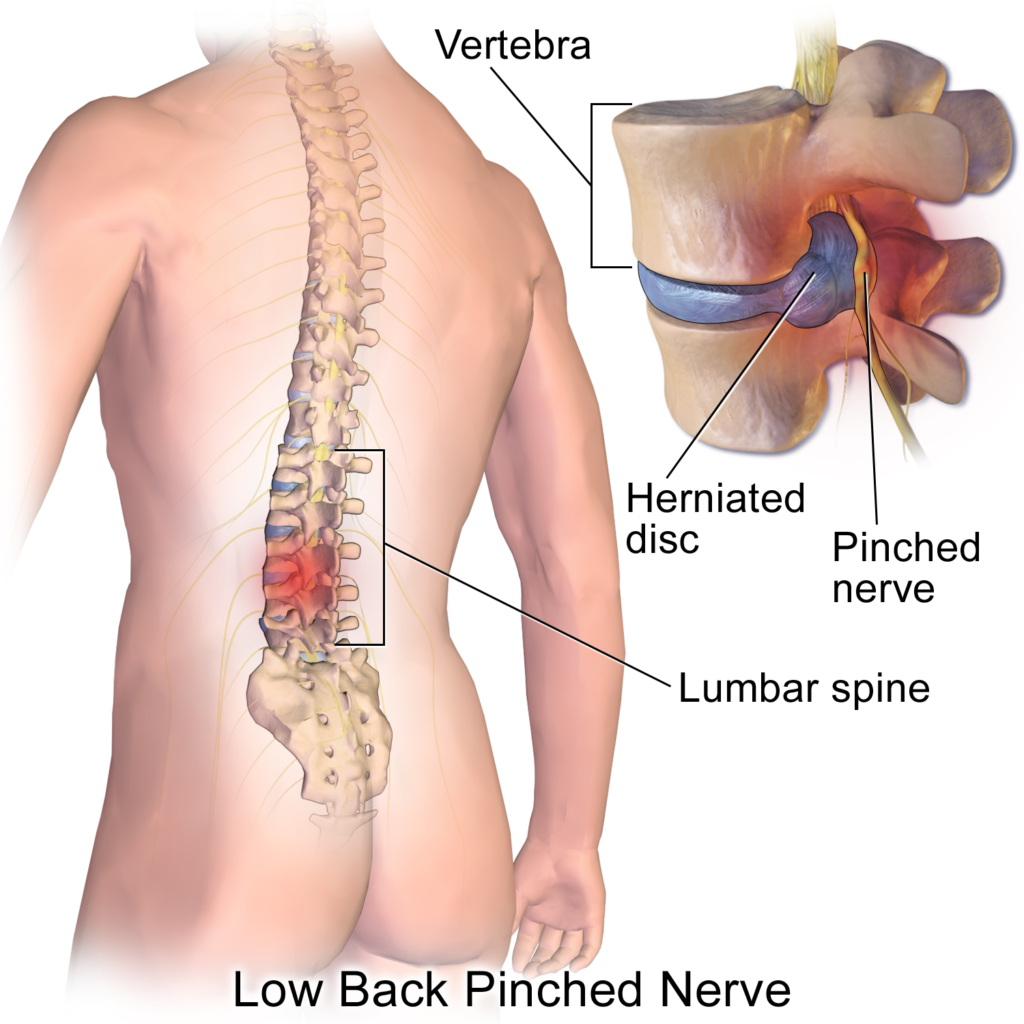
To understand why these fixes hit a wall, think of your spinal discs like jelly donuts cushioned between two hard vertebrae.
Over time, due to gravity, repetitive lifting, poor sitting posture, or trauma from a car accident, those bone vertebrae compress together. That intense pressure forces the soft “jelly” center of the disc to bulge outward or rupture. Once that material pushes out, it directly pinches nearby spinal nerves, triggering burning, numbness, tingling, or stabbing sciatica pain.
Taking a pill or stretching your hamstrings while gravity is still crushing that disc is like trying to patch a leaking tire while someone is standing on it.
To actually give a damaged disc a chance to heal, you don’t need to mask the symptom, you need to relieve the mechanical load and give it breathing room.
The Breakthrough: Non-Surgical Spinal Decompression
This is where non-surgical spinal decompression comes in. It is a gentle, FDA-cleared, computer-assisted technology designed to treat the root cause of disc pain without incisions, needles, anesthesia, or weeks of bed rest.
Now, patients frequently ask me: “Dr. Mina, isn’t this just regular traction like the old stretching tables?”
Not at all.
Old-school traction
A constant, static pull
When you pull on human muscle with constant heavy force, your body’s natural defense mechanism panics. Your spinal muscles immediately spasm and lock up to protect the joint, which can actually increase pressure on the damaged disc.
Spinal decompression
Works with your physiology
Spinal decompression works with your body’s physiology, not against it. The tension changes gradually, so your muscles stay relaxed and the disc gets the space it needs.
What Happens During a Decompression Session at Culver Spine?
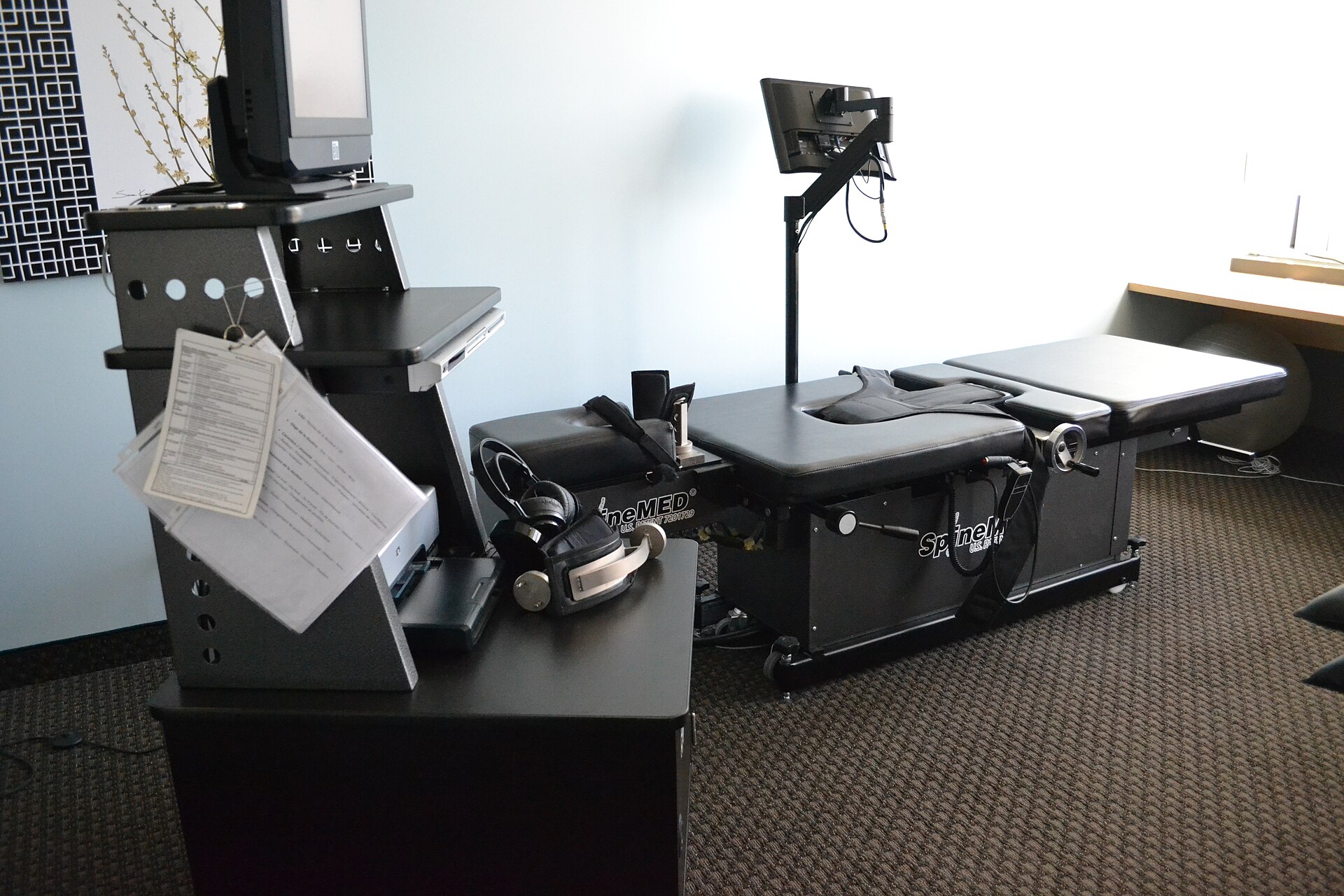
You lie fully clothed on a computer-controlled table, comfortably stabilized by supportive harnesses. The treatment is so smooth and soothing that many of our patients fall asleep during their 30 to 45 minute sessions!
1. Targeted Mathematical Tension
You lie fully clothed on a specialized, computer-controlled decompression table while supportive harnesses comfortably stabilize your body. The table gently stretches and relaxes your spine in a precise, logarithmic cycle tailored to your specific weight and injury level.
2. Bypassing Muscle Resistance
The table senses your body’s muscular response thousands of times per second. By varying the tension incrementally, it tricks surrounding muscles into staying completely relaxed instead of contracting.
3. The “Vacuum Effect” (Negative Intradiscal Pressure)
As your spine is stretched gently, a vacuum effect is created inside the disc center. This negative pressure accomplishes two incredible things:
- It physically helps draw the herniated or bulging disc material back into its proper alignment, taking direct pressure off pinched nerves.
- It creates a suction force that pulls oxygen, hydration, and nutrient-rich fluids into the disc, stimulating natural cell repair and rebuilding tissue integrity.
What Conditions Does Spinal Decompression Help?
While chronic pain is complex and requires a personalized approach, non-surgical spinal decompression is specifically designed to address:
- Herniated or Bulging Discs: Relieving pressure on surrounding nerve roots.
- Sciatica and Radiating Nerve Pain: Stopping sharp, burning pain, numbness, or tingling traveling down your legs, buttocks, or arms.
- Degenerative Disc Disease: Restoring hydration and fluid flow to worn, dehydrated discs.
- Facet Joint Syndrome: Easing friction and stiffness in the small spinal joints.
- Pinched Nerves and Spinal Stenosis Relief: Opening up space within the neural pathways.
Safety first. Decompression therapy is not suitable for pregnant patients, or individuals with severe osteoporosis, unhealed spinal fractures, spinal tumors, or metal surgical hardware in the target area. We always perform a thorough physical evaluation first to make sure it’s 100% safe for you.
Disc pressure often drives low back pain and neck pain too. For more on the science and your Los Angeles options, read our companion guide, Why Choose Spinal Decompression Therapy in Los Angeles?
Not sure if decompression is right for your back?
Bring your MRI or X-ray report. We’ll review your health history, examine your scans, and tell you honestly whether decompression fits.
What to Expect From Your Treatment Plan
Healing a damaged spinal disc isn’t an overnight quick-fix, but it shouldn’t take years either.
Most non-surgical decompression treatment protocols involve a series of targeted sessions over 4 to 6 weeks.
Because we believe in holistic, long-term care at Culver Spine, we often pair decompression therapy with complementary treatments like targeted chiropractic adjustments, acupuncture, or restorative core exercises. This multi-layered strategy ensures that once your disc heals and your pain vanishes, your spine stays strong and supported for the long haul.
Other non-surgical options at our clinic: Shockwave Therapy, EMTT Magneto Therapy, Class 4 Laser Therapy (HILT), and our guide to different methods for back pain treatment in Culver City.
Rated 5.0 stars on Google by more than 200 Culver City patients. Read the reviews on Google Maps
Frequently Asked Questions About Spinal Decompression
It is a gentle, FDA-cleared, computer-assisted treatment that relieves pressure on spinal discs and nerves without incisions, needles, anesthesia, or weeks of bed rest. You lie fully clothed on a computer-controlled table that gently stretches and relaxes your spine. Learn more on our spinal decompression therapy page.
No. Old-school traction applies a continuous, static pull, which can make spinal muscles spasm and lock up and may even increase pressure on the damaged disc. Decompression varies the tension incrementally, so your muscles stay relaxed.
Most patients find it smooth and soothing. You lie fully clothed while supportive harnesses stabilize your body, and many patients fall asleep during their 30 to 45 minute sessions.
Most protocols involve a series of targeted sessions over 4 to 6 weeks. After your evaluation, we tailor the plan to your condition, your weight, and your injury level.
It is designed for herniated or bulging discs, sciatica and radiating nerve pain, degenerative disc disease, facet joint syndrome, and pinched nerves or spinal stenosis. See our pages on disc herniation and sciatica.
It is not suitable for pregnant patients, or people with severe osteoporosis, unhealed spinal fractures, spinal tumors, or metal surgical hardware in the target area. We always perform a thorough physical evaluation first to make sure it is safe for you.
Yes. We often pair decompression with targeted chiropractic adjustments, acupuncture, or restorative core exercises so your spine stays strong and supported after your disc heals.
If you have them, yes. We review your health history and examine your scans and medical reports, then determine whether non-surgical spinal decompression is right for you.
We are at 5601 W Slauson Ave, Suite 266, Culver City, CA 90230. You can book online, call (424) 228-4638, or use our contact page.
Give Your Spine the Breathing Room It Deserves
You don’t have to accept living with chronic daily pain, and you don’t have to jump straight to the operating table without exploring every non-surgical option first. If your back has been screaming for relief, it might simply be telling you it needs space and time to heal naturally.
Ready to Take the Pressure Off?
Let’s take a look at your spine together. Book an appointment with us at our Culver City clinic, and we will review your health history, examine your scans, and figure out if non-surgical spinal decompression is the missing piece in your recovery journey.
Culver Spine
5601 W Slauson Ave, Suite 266
Culver City, CA 90230
info@culverspineca.com
Opening hours
Monday: 2pm – 7pm
Tuesday: 11am – 8pm
Thursday: 11am – 8pm
Wednesday, Friday, Saturday, Sunday: Closed
More From Dr. Mina’s Practices
Closer to Orange County? Our sister practices offer related care.
- Decompression Therapy at Dr. Mina Chiropractic
- Disc Herniation Care at Dr. Mina Chiropractic
- Sciatica Care at Dr. Mina Chiropractic
- Chiropractic Care at LaVeta Wellness, Orange
- Acupuncture at LaVeta Wellness, Orange
- Chronic Pain Care at LaVeta Wellness
Further reading from trusted public sources: MedlinePlus on herniated disks and MedlinePlus on sciatica.
This article is for education and is not a substitute for personal medical advice. Every spine is different, so book an evaluation before starting any treatment plan.